banner-businessdev
BUSINESS DEVELOPMENT
NLP_ground_breaking02_840x560

Cooperation Projects

Baguio has always maintained an open attitude, actively seeking collaboration with various organizations and enterprises. We firmly believe that through multi-party cooperation, we can effectively integrate each other’s expertise and resources to achieve higher-level environmental protection goals together. Whether with local or international organizations, we are committed to establishing strategic partnerships to maximize the efficient use of resources and achieve mutually beneficial outcomes. Together, we are driving the development of a green circular economy and are dedicated to the long-term goal of sustainable development.


Baguio actively participates in a wide range of environmental service projects, covering from waste collection and recycling. In recent years, we have invested resources in collaborative projects focused on the recycling of local plastic and animal waste. These projects fully demonstrate the group's steadfast commitment to environmental protection and showcase our relentless efforts to advance environmental sustainability.

NTM01[3]
The Animal Waste Composting Plant (AWCP)

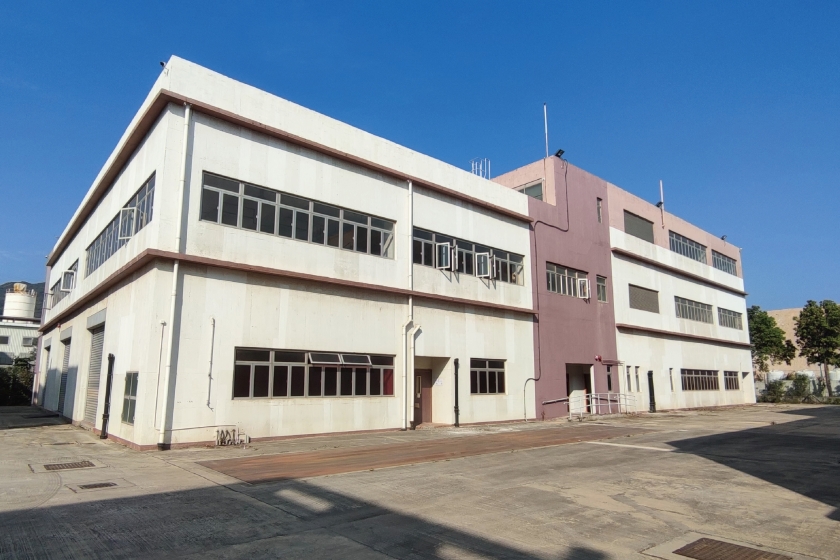
Located at Ngau Tam Mei in Yuen Long, the plant spans over 70,000 square feet and was commissioned in 2008. It was established by the government to support Hong Kong's 2008 Olympic and Paralympic Equestrian Events. Designed, constructed, and operated by Jardine Engineering Corporation Limited (JEC), the facility processed waste from Hong Kong Jockey Club (HKJC) horse stables—including horse manure, straw, paper bedding, and residual feed, converting it into high-quality organic fertilizer for local farms, horticulture, and landscaping applications. This helped alleviate pressure on landfills while promoting resource circularity and sustainability.


Collaboration
Since July 2017, Baguio had partnered with JEC to operate and manage the Ngau Tam Mei Composting Plant. The collaboration combined JEC’s mechanical expertise with Baguio ‘s experience in waste management and recycling to continuously optimize facility performance.

The plant employs enclosed aerobic composting technology with a daily maximum processing capacity of approximately 40 tonnes of stable waste. By precisely controlling moisture and temperature, it ensures stable and efficient compost quality.

In-vessel Composting occurs entirely within enclosed rotary composter, effectively reducing reliance on additional bulking agents. Odorous air was collected and treated by the deodorization system using activated carbon filters for odor control.


Key Processing Workflow:

  • Stable waste is delivered to the pre-treatment plant, tested for moisture content, and fed into the hopper;
  • Ferrous and non-ferrous metal separator, and disc screen, remove metals, plastics, and other non-compostable impurities;
  • Suitable organics materials are shredded and conveyed into enclosed rotary composters for 3-4 days of biodegradation;
  • Semi-mature compost is transferred to curing bunkers for 42-45 days to produce high-quality organic soil conditioner, marketed as "BGSoil";
  • Mature products are tested and monitored in accordance with relevant technical guidelines to ensure safety and stability before supply or sale.

The plant's organic soil conditioner "BGSoil" is certified by the Hong Kong Organic Resource Centre, and is suitable for agricultural and horticultural uses. It supplements soil with organic matter and essential nutrients, improving soil texture, water retention, and fertility, promoting healthy plant growth and sustainable agriculture.


Outcome
"BGSoil" is supplied not only to government departments, schools, and charitable organization, but also to the private market, supporting local horticulture, landscaping and agriculture development.

From 2017 to project completion in 2026, the plant received about 73,219 tonnes* of stable waste and successfully processed at least 53,800 tonnes*, benefiting over 2,200 horticultural and agricultural users and community groups. The project has effectively reduced landfill pressure while advancing the development of Hong Kong circular economy.

*Wet weight


Located at Ngau Tam Mei in Yuen Long, the plant spans over 70,000 square feet and was commissioned in 2008. It was established by the government to support Hong Kong's 2008 Olympic and Paralympic...
Hong Kong | Ngau Tam Mei
BSF_840x560
BSF Hatch - Chicken Farm Waste Processing Plant

Hong Kong generates over 35 tons of chicken manure daily, which typically ends up in landfill sites. To address this environmental challenge, the Environmental Protection Department initiated a one-year pilot project in 2021, employing Black Soldier Fly (BSF) technology for processing poultry waste. The project is managed and operated by Organic Tech Limited, a joint venture between Baguio and Cooh Science. This initiative established the first automated, modern bioconversion facility in Hong Kong, aimed at resolving organic waste issues. 


Collaboration Model and Project Contract 

The project leverages Baguio's extensive experience in waste management and recycling alongside Cooh Science's biotechnological expertise in organic waste processing. The joint venture, Organic Tech Limited, operates the facility known as "BSF Hatch," located in a converted section of the former South China Food Waste Plant at the EcoPark. 


BSF Hatch was completed in 2022 and commenced operations in February 2023. It uses a modular, automated system to process an average of 16.5 tons of poultry waste daily, which accounts for approximately 40% of Hong Kong's total chicken manure production. Originally set to conclude in February 2024, the contract has been extended by six months to August 2024 to allow for additional data collection, as agreed upon by the Environmental Protection Department and Organic Tech Limited. 


Outcomes 

From February 2023 to April 2024, the project has recycled and repurposed 6,231 tons of chicken manure, representing over 40% of the local total. This initiative has significantly reduced the burden on landfill sites and provided a sustainable solution for chicken manure by converting it into valuable by-products such as animal feed, organic fertilizer, and raw materials. This not only promotes the circular economy but also enhances resource reuse, demonstrating the successful implementation of innovative waste management solutions in Hong Kong. 


Hong Kong generates over 35 tons of chicken manure daily, which typically ends up in landfill sites. To address this environmental challenge, the Environmental Protection Department initiated a...
Hong Kong | Eco Park
NLP02_840x560
Plastic Recycling Facility

Urban solid waste includes about 20% plastic waste, with plastic beverage containers constituting approximately 4-5% of this fraction. In pursuit of achieving carbon neutrality by 2050, the Hong Kong government has actively promoted a "plastic-free" culture and has significantly enhanced recycling measures. This initiative aims to transform waste into valuable materials and reduce environmental impact. 


Collaboration 

Baguio,ALBA Group Asia Limited, and Swire Coca-Cola Limited have formed a joint venture, New Life Plastics Limited, to develop sustainable solutions for recycling plastic bottles in Hong Kong. This collaboration is committed to promoting recycling, regeneration, and the remanufacturing of bottles through sustainable plastic education, emphasizing a circular economy. 

The operations of the plastic bottle recycling facility are a combined effort: 

  • ALBA Group brings its technological expertise to sort and convert plastic waste into flakes and granules. 
  • Baguio utilizes its extensive local collection network to provide comprehensive collection and waste management services to the facility. 
  • Swire Properties handles the design and construction of the physical plant facilities. 
  • Swire Coca-Cola designs the plastic collection and recycling systems, ensuring the efficient recovery and processing of beverage PET bottles and HDPE personal care product bottles. 


Recycling Facilities

Urban solid waste includes about 20% plastic waste, with plastic beverage containers constituting approximately 4-5% of this fraction. In pursuit of achieving carbon neutrality by 2050, the Hong Kong...
Hong Kong | Eco Park