


Food Waste
Hong Kong, known for its dense population and limited space, encounters significant challenges in managing food waste. Each day, substantial quantities of food waste are discarded, including valuable recyclable organic resources. The major sources of this waste are the catering industry and residential kitchens. According to the Environmental Protection Department's report on municipal solid waste, food waste accounted for 30% of Hong Kong's municipal solid waste in 2022. This not only places significant pressure on the nearly saturated landfills but also results in a considerable loss of organic resources.
In response to this issue, the Environmental Protection Department launched the "Food Waste Recycling Pilot Scheme." This scheme gradually introduces food waste collection services across various regions, including Hong Kong Island, Eastern Kowloon, Western Kowloon, Eastern New Territories, Western New Territories, and Southwestern New Territories (including the outlying islands), aiming to reduce the volume of food waste disposed of in landfills.
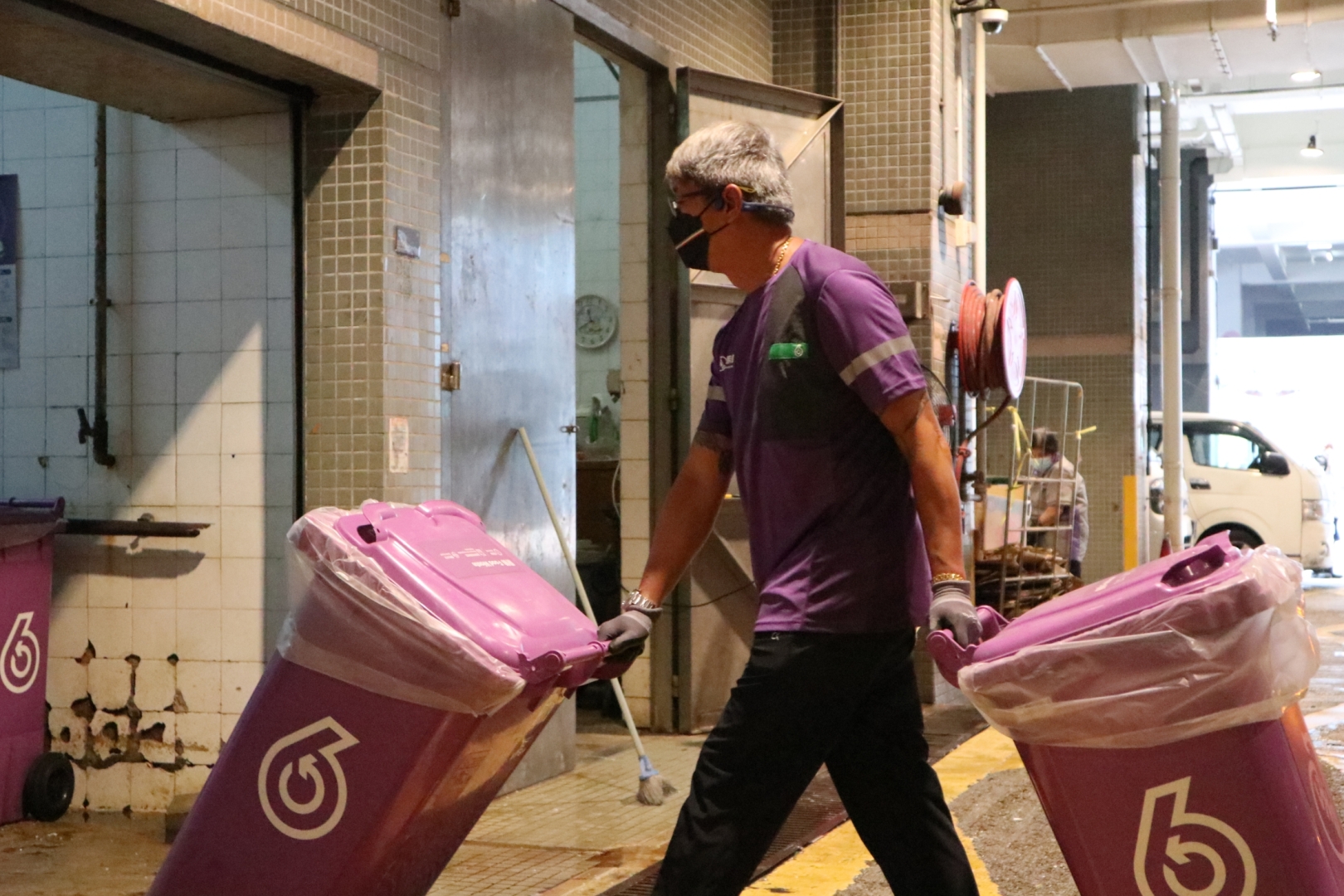
As the contracted operator in this initiative, Baguio is responsible for the collection of food waste in the Western New Territories and Hong Kong Island. Collected food waste is consolidated at designated venues such as residential estates, shopping centers, and commercial buildings at specific locations like waste holding areas near parking lots, and collected according to a scheduled using point-to-point and "bin swap" methods.
Moreover, we have established Food Waste Recycling Spots in areas with high concentrations of restaurants to facilitate the collection of food waste from smaller eateries and shops. These spots are regularly visited to ensure efficient waste collection, and each batch of collected food waste is weighed, documented, and subsequently uploaded to the cloud. The collected food waste is then transported to the Environmental Protection Department's processing facilities, such as O-PARK, for further treatment.